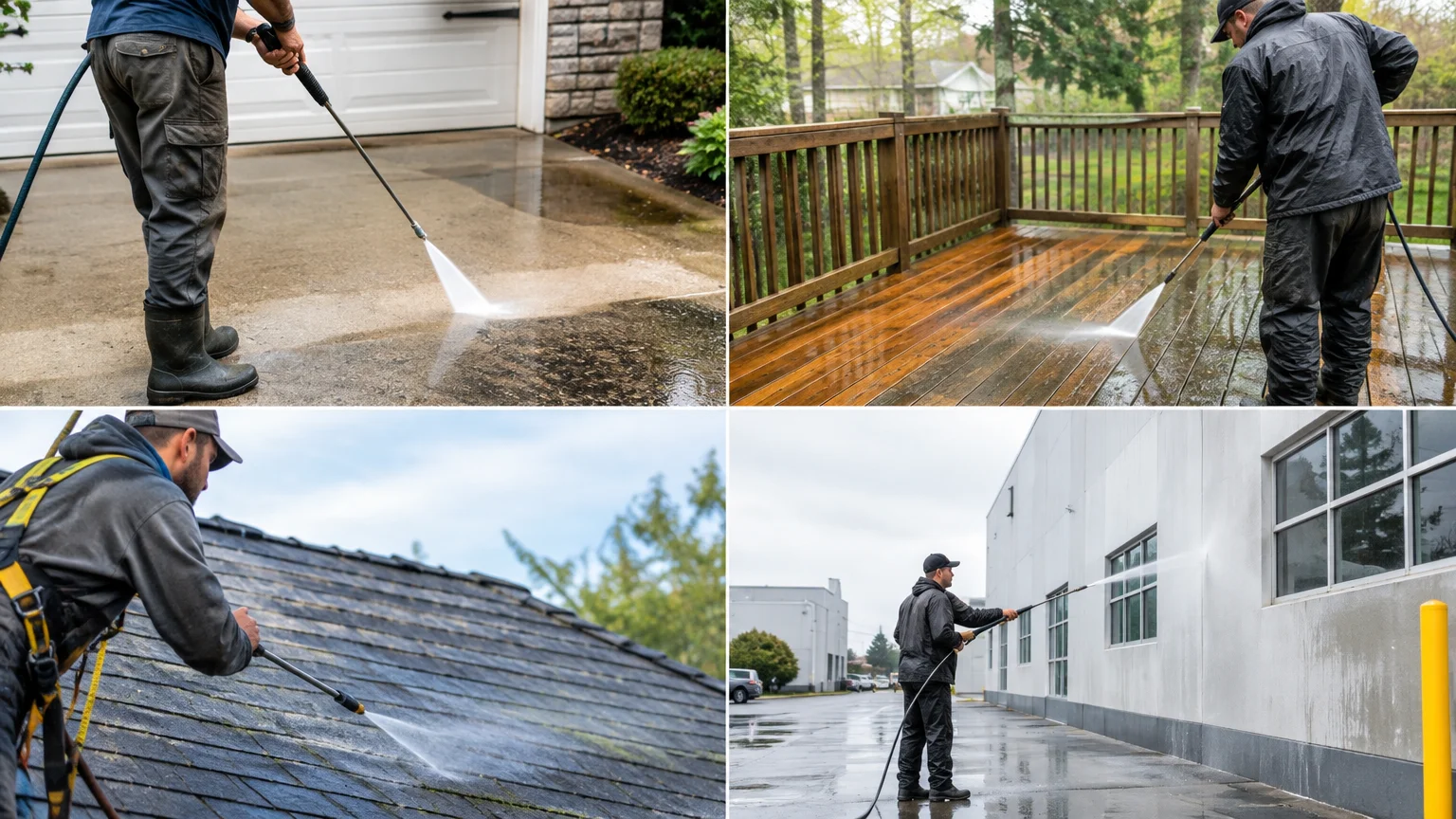
To pressure wash vinyl siding safely, use low pressure, a wide spray, mild siding detergent, and a safe distance. Keep the spray moving across the panels instead of behind them. This method helps remove dirt, mold, and mildew while lowering the risk of cracks, loose panels, streaks, and water behind the siding.
Table of Contents
- Can you safely pressure wash vinyl siding?
- What should you do before pressure washing vinyl siding?
- What pressure washer settings are safest for vinyl siding?
- What cleaning solution should you use on vinyl siding?
- How do you pressure wash vinyl siding without causing damage?
- What common mistakes should you avoid when cleaning vinyl siding?
- When should you hire a professional to wash vinyl siding?
- Frequently Asked Questions
- Key takeaways
- Conclusion
Can you safely pressure wash vinyl siding?
Yes, homeowners can safely pressure wash vinyl siding when they use the right tools and method. Vinyl siding can handle rain and normal outdoor wear. However, a strong spray that gets too close can crack, bend, loosen, or move the panels.
The goal is not to use the strongest setting. The goal is to remove dirt with the least force needed. A wide spray and steady movement often work better than a thin, hard stream. Huntsville AL Pressure Washing can help property owners choose between careful home cleaning and professional House Washing Services when the siding needs more care.
How pressure washing can damage vinyl siding
A narrow nozzle can cut into the siding or leave clear marks. Strong water can also move under a panel, around a window, or behind a loose section. Hidden water may then reach insulation, wood, or wall materials.
Too much pressure can move siding out of place. This risk is higher when panels are old, brittle, cracked, or already loose. Spraying upward makes the risk worse because water can travel behind the overlapping panels.
When pressure washing is appropriate
Pressure washing can work well for loose dirt, dust, pollen, and light organic growth. It may also clean siding before painting or other outside work. First, check the surface for damage because washing cannot repair broken panels or failed caulk.
Some homes are better suited to soft washing. Soft washing uses low water pressure and a cleaning solution to loosen grime. It can be a safer choice for older siding, heavy mildew, delicate trim, and areas near openings. The best method depends on the siding, the stain, and the person handling the equipment.
What should you do before pressure washing vinyl siding?
Before you begin, inspect the siding, close all openings, move loose items, and protect nearby plants. Good preparation helps prevent damage that a spray wand cannot fix. It also gives you a clear view of weak areas before water covers the wall.
Check the water source and equipment as well. The hose should not leak, the wand should connect firmly, and the nozzle should be clear. Keep windows and doors closed for the whole cleaning job.
Inspecting the siding for cracks, gaps, and loose panels
Walk around the home and look at each wall from the ground. Check for cracked panels, open seams, loose corners, missing trim, and gaps around windows. Pay close attention where siding meets the roof, deck, porch, or foundation.
Small damage can grow under pressure. Homeowners can safely handle this visual check. They can also remove cobwebs and trim light plant growth away from the wall. Damaged siding should be repaired before washing.
Protecting windows, doors, plants, and outdoor fixtures
Close and latch all windows and doors. Cover outdoor outlets, cameras, light fixtures, and other items that should stay dry. Move furniture, toys, grills, and decorations away from the wall.
Water plants near the wall before washing. Cover delicate plants loosely when needed. Keep detergent away from ponds and storm drains. Follow the product label around grass, shrubs, and garden beds. A clear work area also helps you keep the spray steady.
What pressure washer settings are safest for vinyl siding?
The safest setting is the lowest pressure that removes the dirt. A wide fan nozzle is usually safer than a narrow tip because it spreads water across more space. Test a hidden area first and look for changes in color, texture, or panel movement.
The right setting depends on the machine, nozzle, distance, and siding condition. No single setting works for every home. Follow the machine maker’s directions, and stop if the siding flexes or water enters a seam.
Choosing the right nozzle and spray distance
A wide-angle nozzle creates a softer spray than a narrow tip. Start with the wand farther from the siding. Move closer only if the surface stays steady and clean. Keep the wand moving so one spot does not receive too much force.
The spray should hit the siding straight on or at a slight downward angle. Do not point it upward beneath the panels. Use more space and less force near corners, vents, window trim, and damaged areas.
Adjusting water pressure for different siding conditions
New, sound siding may handle more force than old or brittle siding. Still, stronger pressure is not always better. Light dirt may need only water and mild detergent. Mildew often responds better to cleaning time than added pressure.
Change one thing at a time. If dirt remains, let the solution work longer before raising the pressure. If the siding moves, cracks, or looks marked, stop right away and use a gentler method.
What cleaning solution should you use on vinyl siding?
A detergent made for exterior siding is the best starting point. Mix and apply it as the label says. Too much product can leave a film, harm nearby plants, or make rinsing harder.
A good solution loosens grime, so water does not need to do all the work. This is why soft washing can clean delicate surfaces with less force. Never mix cleaning products unless the labels clearly say that it is safe.
Selecting a siding-safe detergent
Choose a product that lists vinyl siding or exterior house cleaning on its label. Avoid harsh powders, rough cleaners, and products that may harm painted trim. Test the mixture on a small hidden spot before cleaning the full wall.
Apply the solution from the bottom upward when possible. This can help limit uneven runs on a dirty wall. Keep the surface wet while the product works, but do not let it dry in direct sun. Read the label for contact time, safety gear, and rinse directions.
Handling mold, mildew, algae, and stubborn stains
Mold, mildew, and algae are types of organic growth. They can leave dark, green, or gray marks on siding. A suitable exterior cleaner can loosen this growth, but the wall may need more than one gentle pass. Hard scrubbing or a sharp spray can cause lasting damage.
Rust, tree sap, smoke, and nearby metal can cause other stains. These stains need different products and careful spot tests. If a stain does not lift with siding-safe cleaner, avoid stronger chemicals and ask a professional House Washing Services provider for guidance.
How do you pressure wash vinyl siding without causing damage?
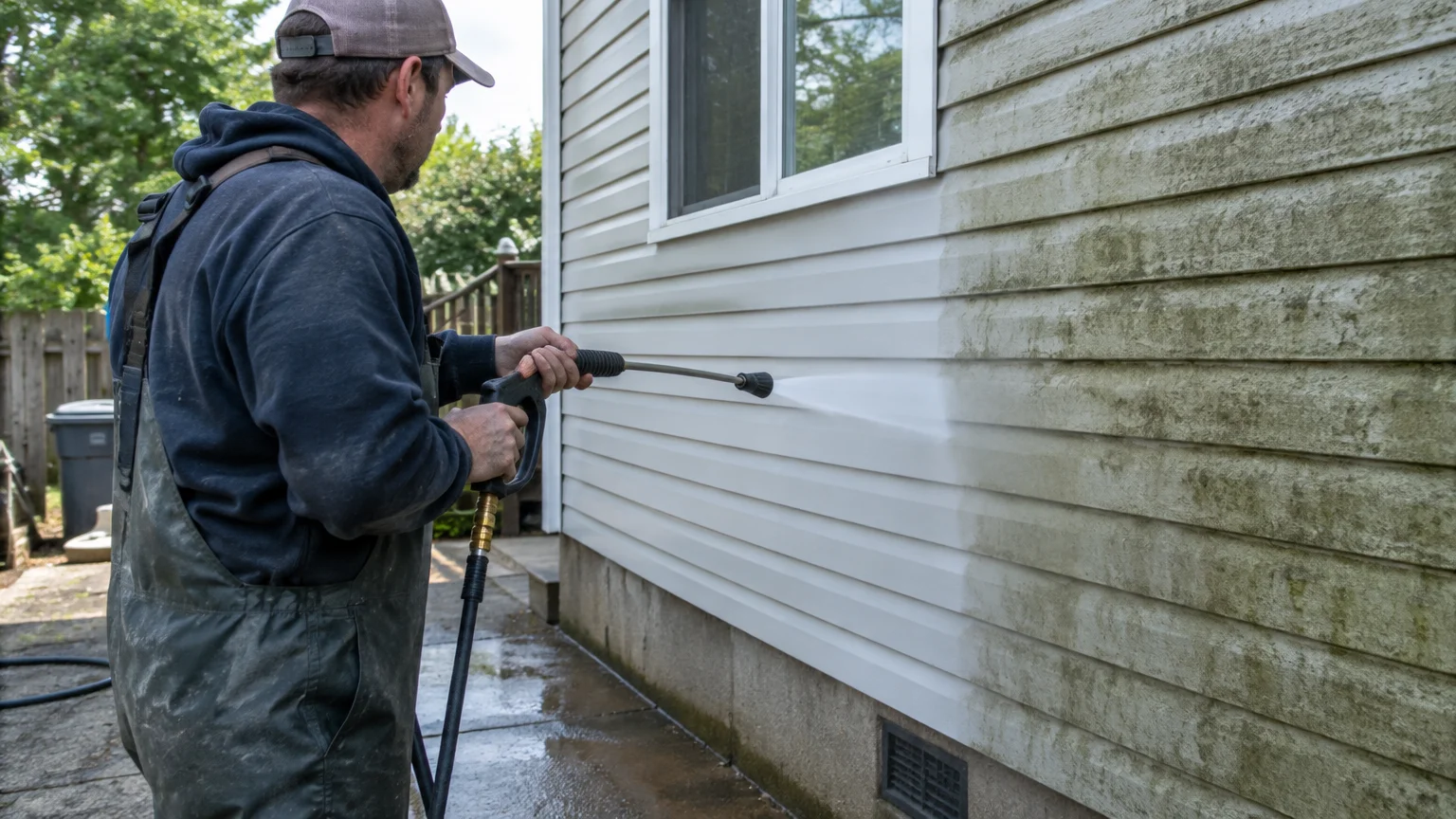
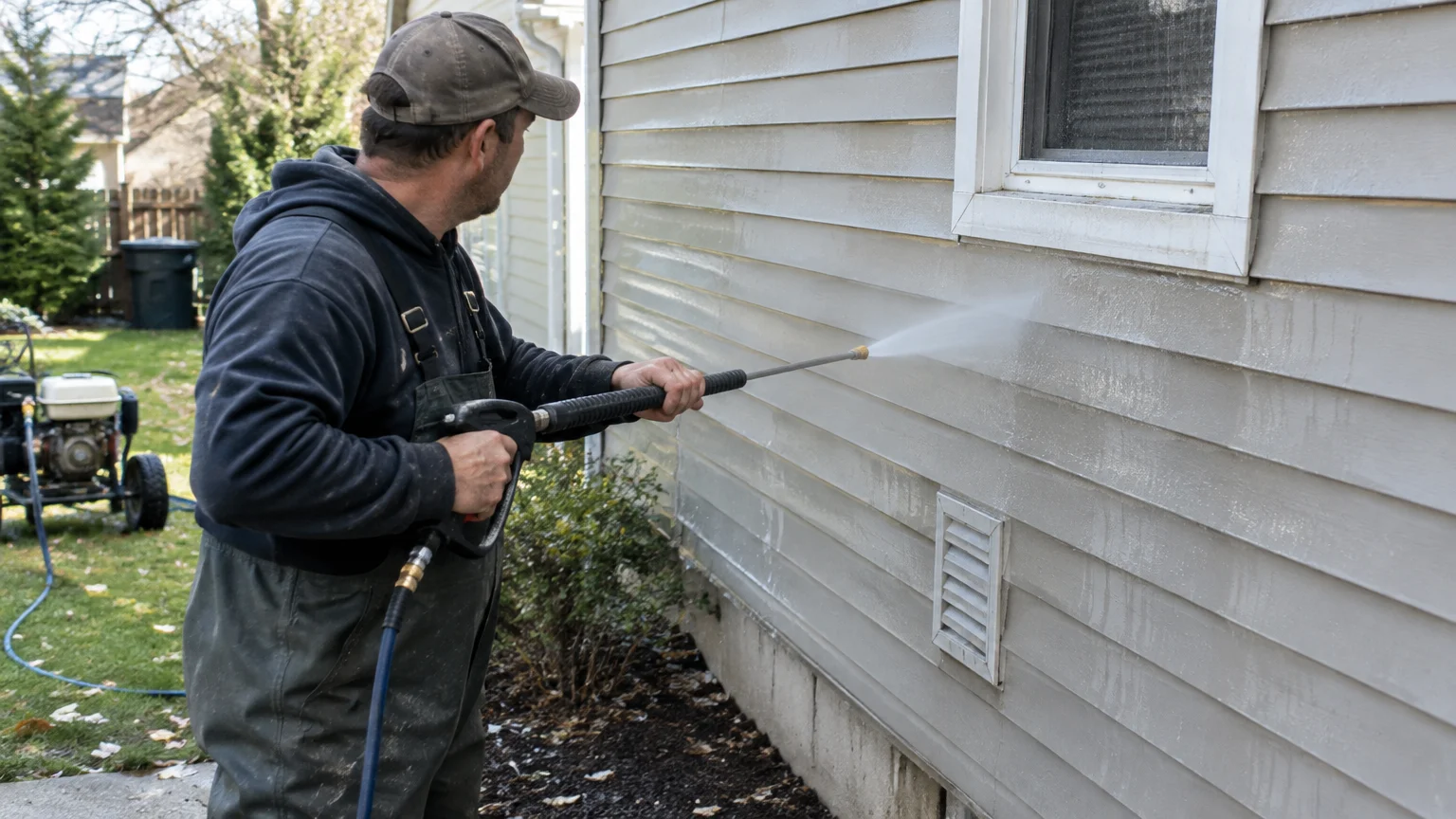
To pressure wash vinyl siding safely, clean small sections at a time and keep the spray moving. Apply detergent, let it work as directed, and rinse from the top down with a wide spray. Keep the wand away from seams, vents, windows, and damaged spots.
A steady pattern helps prevent missed areas and streaks. Watch the siding while you work, not only the dirt. Any movement, lifting, or water entry means you should stop and check the surface.
Using the correct spray direction and washing pattern
Start at the top of one wall and work across in overlapping passes. Keep the spray aimed slightly downward. This follows the way the panels overlap and lowers the chance of forcing water behind them.
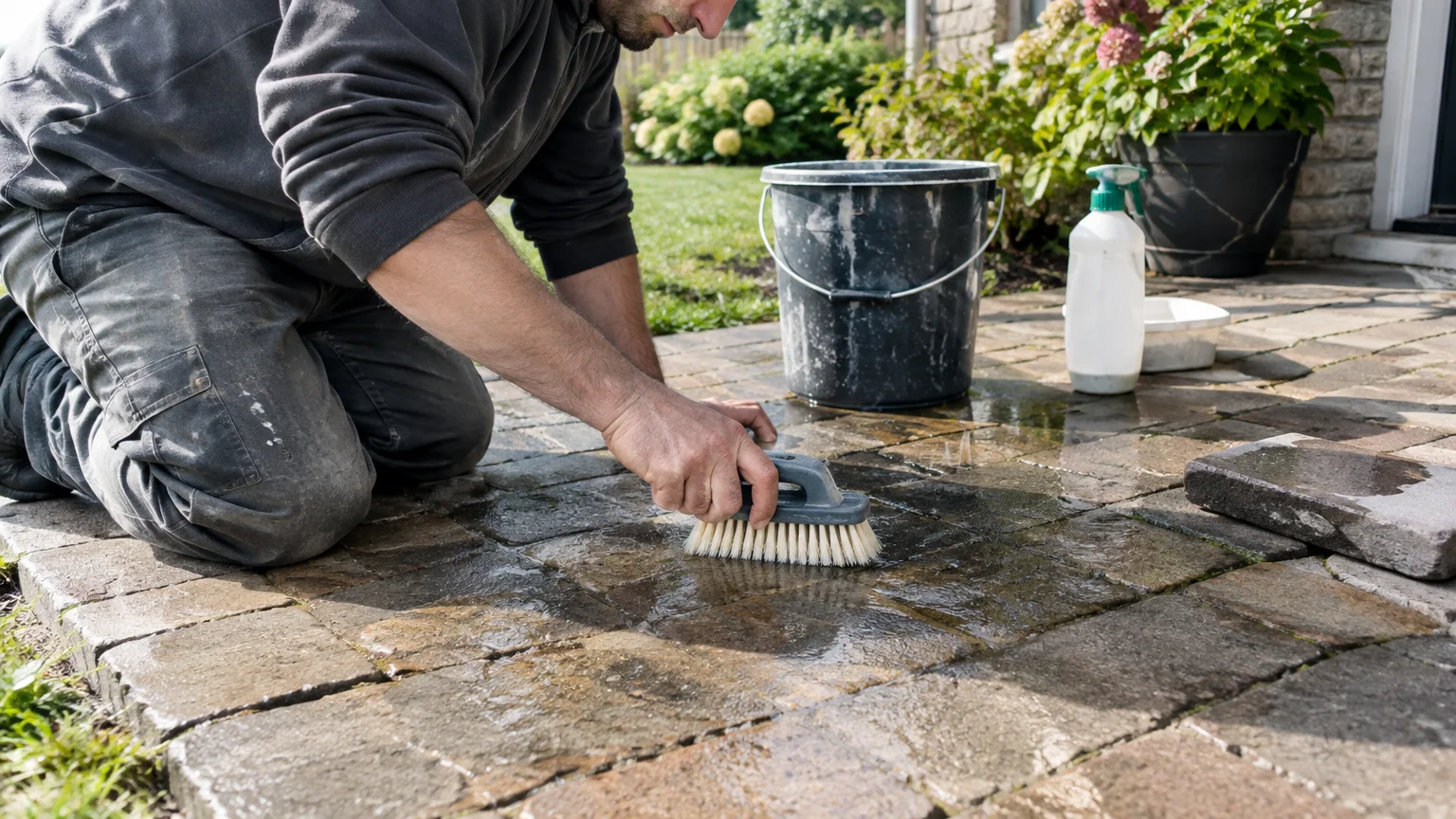
Wash one manageable section at a time. Rinse each section before the detergent dries. Use a soft hand brush near trim, lights, and windows instead of bringing the pressure wand close.
Rinsing thoroughly without forcing water behind the siding
Rinse until no soap, foam, or dirty runoff remains. Start at the top and guide the water down. Keep the wand at a safe distance. Do not spray directly into seams, vents, electrical items, or openings.
After rinsing, inspect the wall from several angles. Look for cloudy film, missed dirt, streaks, and water near windows or doors. Let the siding dry before deciding if another gentle pass is needed.
What common mistakes should you avoid when cleaning vinyl siding?
Most siding damage comes from too much force, poor spray direction, or weak preparation. Do not rush because a fast job can leave stains and water problems. Simple checks during the work help protect the home.
A pressure washer cannot replace repairs. Loose panels, failed caulk, and damaged trim need attention before cleaning. Clean siding will not stay clean if water can enter behind it or if dirty water spills from nearby gutters.
Why spraying upward and working too close can cause problems
Spraying upward can push water behind overlapping siding. Working too close can bend panels, strip the finish, and damage caulk. A narrow nozzle can cause the same problems even when the machine setting seems mild.
Another mistake is holding the wand still. A stationary spray puts too much force in one spot. Use smooth passes, keep a safe distance, and lower the force around corners and openings.
When should you hire a professional to wash vinyl siding?
Homeowners do not need a professional for light dirt and simple upkeep when the siding is sound and they can control the equipment. Professional help makes more sense for tall walls, heavy growth, fragile siding, hard-to-reach areas, or signs of water entry.
A trained technician can compare pressure washing with soft washing and choose the safer method for each surface. Huntsville AL Pressure Washing serves local property owners and can assess whether the home needs House Washing Services or a gentler cleaning plan. Huntsville weather, shade, trees, and moisture can all affect how often buildup returns.
Signs the job may require professional equipment or experience
Professional help may be useful when:
- Siding panels are cracked, loose, brittle, or badly stained.
- The home has more than one story or difficult roofline access.
- Mold or algae covers large sections of the outside walls.
- Water has entered around windows, doors, vents, or wall seams.
- The homeowner cannot safely control a pressure washer.
A professional should explain the cleaning method before work begins. Ask how the siding, plants, windows, and outdoor fixtures will be protected. The plan should match the home’s surface and condition.
How to maintain clean vinyl siding after pressure washing
Simple care can help siding stay cleaner. Rinse light dust when needed, keep gutters flowing, trim branches away from the wall, and repair loose panels quickly. Check shaded areas more often because they may stay damp longer.
Homeowners can safely handle these simple checks. Professional cleaning becomes useful when stains return quickly, growth covers a large area, or safe access is hard. Regular care is easier when problems are found early.
Frequently Asked Questions
What PSI pressure washer do I need to clean siding?
The safest pressure depends on the machine, nozzle, distance, and siding condition. Start with the lowest useful setting and test a hidden area. A broad spray and careful movement matter more than choosing a powerful machine. Soft washing may be safer for old, damaged, or delicate vinyl siding.
What PSI should be used to wash vinyl siding?
There is no universal setting for every vinyl-sided home. Light dirt may need very little force, while detergent can handle much of the work. Keep the wand far enough away to prevent panel movement or water entry. If the siding flexes, stop and lower the force.
How often should a house be power washed?
Clean a house when dirt, mildew, algae, or pollen becomes noticeable instead of following one fixed schedule. Shade, trees, moisture, and local weather affect how fast buildup returns. Gentle care between professional washes can help. A yearly check can help you decide when cleaning is needed.
Can pressure washing remove mold and mildew from vinyl siding?
It can remove surface growth when the right exterior detergent and rinse method are used. More pressure is not always the answer because it may damage siding or push water behind it. Deep stains may need professional soft washing and a closer look at moisture sources.
Is soft washing better than pressure washing for vinyl siding?
Soft washing is often safer for older siding, heavy organic growth, and areas near trim or openings. It uses low pressure with a cleaning solution. Pressure washing may suit sound siding with loose dirt. The best choice depends on the surface, stain, access, and operator control.
Key takeaways
- Use the lowest useful pressure with a wide spray pattern.
- Inspect and protect the home before using water or detergent.
- Spray downward or straight on, never upward beneath siding panels.
- Let a siding-safe cleaner do the work instead of adding force.
- Choose professional help for tall, damaged, fragile, or heavily stained siding.
Conclusion
Vinyl siding can be cleaned safely when the process is slow, gentle, and planned. The main risks come from strong pressure, narrow nozzles, upward spray, and hidden damage. Homeowners can manage light cleaning and simple checks, while difficult access or heavy growth may need professional care.
Huntsville AL Pressure Washing can help property owners remove dirt, mildew, and outdoor buildup while protecting the siding. Property owners in Huntsville can discuss their cleaning needs with the local team. Contact us to discuss a safe house washing plan.